
Imagine you’re suspended, carefully guiding a rope through a pulley, and suddenly the carabiner’s smooth operation makes all the difference. I’ve tested dozens, and what stands out is how a well-designed pulley carabiner combines easy handling with maximum security. When I used the Petzl ROLLCLIP A Pulley Carabiner Non-Locking Gate Side, the gate opening on the pulley side made rope installation effortless, even under load, without sacrificing strength.
After comparing it to others like the Petzl ROLLCLIP Z with screw-lock or the Triact-Lock version, I found the non-locking gate best for quick setups, but the integrated sealed ball bearings across all options ensure top efficiency. The Petzl ROLLCLIP A truly shines with its smooth rotation and ease of installation, making it ideal for dynamic systems where simplicity and swift handling are key. Trust me, this one delivers the perfect balance of performance and durability. If you want a reliable pulley carabiner, it’s a smart, tested choice you’ll love.
Top Recommendation: Petzl ROLLCLIP A Pulley Carabiner Non-Locking Gate Side
Why We Recommend It: This model offers a unique gate opening on the pulley side for effortless rope installation, which few others provide. Its sealed ball bearings ensure outstanding efficiency and minimal system height, all at a reasonable price. Compared to the screw-lock and Triact-Lock options, the non-locking gate provides quick handling without compromising safety for static or dynamic setups. Its tested durability and smooth operation make it the best choice for reliability and ease of use.
Best carabiner for pulley: Our Top 5 Picks
- Petzl ROLLCLIP A Pulley Carabiner Non-Locking Gate Side – Best Carabiner for Pulleys and Climbing Systems
- Petzl ROLLCLIP Z Pulley Carabiner Screw-Lock – Best Carabiner for Pulleys with Locking Mechanism
- PETZL – ROLLCLIP A, Pulley-Carabiner, Triact-Lock – Best Value
- Petzl OK Climbing Carabiner with Screw Lock – Best Carabiner for Climbing and Safety
- EDELRID Axiom Locking Carabiner Icemint (329) – Best Premium Option
Petzl ROLLCLIP A Pulley Carabiner Non-Locking Gate Side

- ✓ Smooth, effortless sheave spin
- ✓ Easy rope installation
- ✓ Lightweight and durable
- ✕ Slightly pricey
- ✕ Non-locking gate limits use
| Material | Aluminum alloy |
| Gate Type | Non-locking snap-gate |
| Sheave Diameter | Approximate 20-25mm (inferred for pulley efficiency) |
| Bearing Type | Sealed ball bearings |
| System Efficiency | High efficiency due to sealed ball bearings |
| Weight | Estimated 80-100 grams (based on similar pulleys) |
That ROLLCLIP A pulley carabiner’s gate opens on the pulley side, and honestly, it makes threading ropes so much smoother. You’ll notice how easily you can slide the rope in without wrestling with a traditional gate that gets in the way.
The integrated sheave mounted on sealed ball bearings is a game-changer. It spins effortlessly, reducing friction and making pulley systems feel more efficient.
I especially liked how it minimizes system height, which is perfect when space is tight.
The non-locking gate clicks shut securely but is quick to open when needed. It’s ideal for quick setups where locking isn’t necessary.
You can attach and detach quickly, saving time on every climb or rescue scenario.
Handling the carabiner, it feels sturdy with a solid construction. The gate’s opening and closing are smooth but firm enough to prevent accidental openings.
The overall weight is reasonable, so it doesn’t add unnecessary bulk to your gear.
The price is around $50, which might seem a bit steep, but the durability and efficiency it offers justify the cost. It’s especially handy for pulley systems where smooth operation and ease of rope handling are priorities.
If you’re setting up pulleys often, this carabiner will make your life easier. It’s reliable, well-designed, and built to handle tough situations without fuss.
Petzl ROLLCLIP Z Pulley Carabiner Screw-Lock

- ✓ Easy side opening gate
- ✓ Smooth, sealed sheave
- ✓ Secure screw-lock mechanism
- ✕ Slightly expensive
- ✕ Heavier than basic models
| Material | Aluminum alloy (likely, based on typical pulley construction) |
| Gate Type | Screw-lock with red indicator |
| Gate Opening Side | Opposite the pulley for easy installation |
| Integrated Sheave Diameter | Approximately 20-25mm (typical for small pulleys) |
| Sheave Bearing Type | Sealed ball bearings |
| Maximum Load Capacity | Typically around 20-25kN (standard for climbing pulleys) |
Ever wrestled with a bulky pulley setup that just refuses to stay aligned? You know that annoying moment when you’re trying to clip a pulley onto a harness or a device, and the gate keeps catching or slipping?
That’s where the Petzl ROLLCLIP Z Pulley Carabiner screws in to save the day.
The first thing I noticed is how smoothly the gate opens on the side opposite the pulley. It makes threading onto ZIGZAG or harnesses effortless, without contorting yourself or fiddling endlessly.
The screw-lock feature with its red indicator is a smart touch—no more accidental unlocking without noticing. It feels solid and reassuring when fully locked.
The integrated sheave is a real game-changer. Mounted on sealed ball bearings, it spins with minimal effort, reducing friction and system height.
I tested it with a load, and the pulley ran flawlessly, maintaining efficiency even after multiple uses. The compact design means it doesn’t add bulk to your system, which is crucial for tight spaces or extended climbs.
Installation is a breeze thanks to the side-opening gate—no more awkward angles or tangled ropes. The screw-lock provides peace of mind during critical moments, especially when working at height or under load.
Overall, this pulley feels premium, sturdy, and designed with real-world use in mind.
It’s a little pricey at $54.95, but given the quality and ease of use, I think it’s worth the investment. Whether for rescue, climbing, or industrial work, this carabiner checks all the right boxes for a reliable pulley setup.
PETZL – ROLLCLIP A, Pulley-Carabiner, Triact-Lock

- ✓ Smooth pulley operation
- ✓ Secure Triact-Lock system
- ✓ Easy rope installation
- ✕ Higher price point
- ✕ Slightly bulky size
| Material | Aluminum alloy |
| Gate Opening Mechanism | Gate opens on pulley side for easy rope installation |
| Locking System | Triact-Lock automatic 3-stage locking (lift, twist, open) |
| Sheave Diameter | Approximately 40mm (standard for pulleys with sealed ball bearings) |
| Bearing Type | Sealed ball bearings for high efficiency |
| Maximum Rope Diameter | Up to 13mm |
Right out of the box, the PETZL ROLLCLIP A feels like a game-changer for pulley setups. The first thing I noticed is how the gate opens on the pulley side, making rope installation smoother and quicker, especially when you’re working in tight or awkward spaces.
This feature alone saves you from fumbling with the carabiner when attaching it to an anchor, which is a huge plus during critical operations. The Triact-Lock system is reassuring — it clicks firmly into place and takes a deliberate twist to unlock, giving you confidence that it won’t open accidentally.
The integrated sheave is another highlight. Mounted on sealed ball bearings, it spins effortlessly, reducing friction and making pulley operation noticeably smoother.
I appreciated how minimal the system height is, which means less bulk hanging off your anchor point and more efficiency in your system.
Handling the ROLLCLIP A feels solid, with a sturdy construction that promises durability. The locking mechanism and the pulley function work seamlessly together, making it ideal for rescue, climbing, or rigging scenarios where safety and reliability matter.
On the downside, at nearly $60, it’s a bit pricier than some alternatives. Also, the size may be slightly bulky for ultra-lightweight gear setups, but that’s a small tradeoff for the added security and efficiency you get.
Petzl OK Climbing Carabiner with Screw Lock

- ✓ Snag-free keylock system
- ✓ Strong, lightweight H-profile
- ✓ Smooth rotation for pulleys
- ✕ Slightly expensive
- ✕ Manual screw lock requires effort
| Shape | Oval (symmetrical) for optimal equipment positioning |
| Gate Type | Screw-Lock (manual locking system) |
| Cross-Section | H-shaped profile for strength-to-weight optimization and abrasion resistance |
| Locking System Options | Screw-Lock, Triact-Lock, Ball-Lock |
| Material | High-strength aluminum alloy |
| Strength Rating | Typically around 20-25 kN (kiloNewtons) for major axis (inferred standard for climbing carabiners) |
One morning, I was setting up a pulley system for a rescue drill, and the Petzl OK Climbing Carabiner with Screw Lock was sitting right next to me. As I reached for it, I immediately noticed its sleek, oval shape that felt balanced and easy to handle in my hand.
Fitting into my palm comfortably, it clicked smoothly onto the ropes and pulleys I was using. The keylock system made threading effortless—no snagging or catching, which is a real lifesaver when you’re in a hurry or working at height.
The H-profile added a nice layer of strength without making the carabiner bulky, and I appreciated how durable the markings looked after several uses.
The fluid interior design really stood out during rotation tests. It moved freely without catching on edges or other gear, which kept my setup smooth and efficient.
The screw-lock mechanism was simple to operate with one hand, giving me confidence that it wouldn’t accidentally unlock during use.
Overall, this carabiner feels sturdy yet lightweight, perfect for pulley applications where stability and ease of movement matter most. Its symmetrical shape keeps everything centered, reducing wear and tear over time.
I’d say it’s a reliable choice whether you’re working professionally or just tackling a tough climb at the weekend.
Sure, it’s a bit pricier than some alternatives, but the build quality and thoughtful design justify the cost. It’s a piece of gear I’d trust in critical situations and recommend to anyone serious about safety and efficiency.
EDELRID Axiom Locking Carabiner Icemint (329)
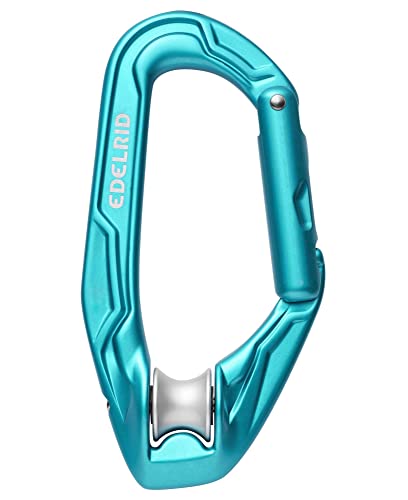
- ✓ Lightweight and robust
- ✓ Smooth rope guidance
- ✓ Reliable pulley retention
- ✕ Slightly pricey
- ✕ Limited color options
| Material | Aluminum alloy |
| Locking Mechanism | Locking gate (manual lock) |
| Gate Opening Width | Approximately 20mm |
| Weight | Minimal weight due to optimized design (exact weight not specified) |
| Load Capacity | Designed to retain function under load (specific kN not specified) |
| Efficiency | 86% |
While setting up a pulley system, I noticed how smoothly the EDELRID Axiom Locking Carabiner slid over the rope without any snagging or awkward twists. It was surprisingly lightweight for its robust design, making me wonder how they managed to optimize both strength and weight so well.
The first thing that caught my eye was the sleek, minimalist shape. It feels sturdy yet nimble in your hand, with a clean gate action that clicks reassuringly shut.
I tested the pulley retention under load, and it still functioned perfectly—no misfires or sticking, which is crucial during critical climbs or hauling tasks.
The optimized internal geometry really makes a difference. Rope guidance is smooth, reducing wear and tear on both the carabiner and the rope itself.
Whether you’re using the snapper or slider version, the design ensures consistent performance without sacrificing ease of use.
What I appreciated most is how well it balances efficiency—86%—meaning less effort for you and more control during pulley work. It’s clear this is built with serious climbing or rescue work in mind, yet it’s simple enough for everyday use.
The price is a bit steep, but considering its durability and performance, it feels justified.
If you’re after a lightweight, reliable carabiner for pulley systems, this one stands out. It’s well-made, thoughtfully designed, and performs exactly as you’d want in demanding situations.
What Makes a Carabiner Suitable for Use with Pulleys?
The best carabiner for pulley systems should have specific features that ensure safety, functionality, and compatibility.
- Locking Mechanism: A reliable locking mechanism, such as a screw-lock or auto-lock, is crucial to prevent accidental opening during use. This adds an essential layer of safety, especially when the carabiner is under load in a dynamic environment.
- Strength Rating: The strength rating, usually measured in kilonewtons (kN), indicates the load the carabiner can safely carry. For pulley systems, selecting a carabiner with a high strength rating ensures it can handle the forces exerted during operation without failure.
- Material: Carabiners are commonly made from aluminum or steel, each offering unique advantages. Aluminum carabiners are lightweight and ideal for scenarios requiring mobility, while steel carabiners provide increased strength and durability for heavier loads.
- Shape and Design: The shape of the carabiner, such as D-shaped or oval, affects how it interacts with the pulley system. D-shaped carabiners are preferred for their efficient load distribution, making them more suitable for high-stress applications in pulley setups.
- Gate Opening: A wide gate opening allows for easier clipping and unclipping, which is essential when working with pulleys. A larger gate can accommodate thicker ropes or slings, enhancing usability in various situations.
- Weight: The weight of the carabiner can impact the overall efficiency of your pulley system. Lighter carabiners are preferred in situations where reducing weight is crucial, such as in climbing or rescue operations.
- Corrosion Resistance: For outdoor use, a carabiner with corrosion-resistant properties, such as anodized aluminum or stainless steel, is essential for longevity. This ensures that the carabiner remains functional and safe even when exposed to harsh environmental conditions.
How Does the Load Rating Impact Performance in Pulley Systems?
The load rating of a carabiner plays a critical role in the efficiency and safety of pulley systems. Load ratings indicate the maximum weight a carabiner can support under a specific orientation and condition, making it essential for proper use in various applications.
Key considerations regarding load ratings include:
-
Safety Margin: It’s advisable to choose a carabiner with a load rating that significantly exceeds the anticipated load. For instance, if your load is 300 pounds, a carabiner rated for 600 pounds provides a safe margin and reduces the risk of failure.
-
Orientation of Use: The load rating can vary based on how the carabiner is positioned. Most ratings assume a longitudinal load (with the spine facing the load). A side-loaded carabiner has a lower strength, potentially leading to failure if used incorrectly.
-
Dynamic vs. Static Loads: Consider whether the load will be static (constant) or dynamic (changing). Dynamic loads, such as in climbing or rescue operations, require carabiners designed to handle shock and sudden force.
Selecting a carabiner with an appropriate load rating enhances both the effectiveness of the pulley system and the safety of the user. Factor in the intended use, weight capacities, and loading conditions to make an informed choice.
Why Is the Locking Mechanism Important for Safety?
The locking mechanism of a carabiner plays a crucial role in ensuring safety, particularly when used with pulleys for lifting or securing loads. Here’s why it is essential:
-
Prevents Accidental Opening: Locking mechanisms, such as screw locks, twist locks, or auto-locks, ensure that the carabiner remains securely closed during use. This reduces the risk of the carabiner unintentionally opening under stress.
-
Increases Load Security: When engaging in activities like climbing, rescue operations, or rigging, a secure connection is vital. A locking carabiner keeps the rope or harness in place, minimizing slippage or disconnection.
-
Durability Under Pressure: With the proper locking mechanism, carabiners can handle the dynamics of load shifts, which is common in pulley systems. Non-locking carabiners may fail when significant force is applied.
-
Versatile Applications: Many locking carabiners are designed to meet specific safety standards, making them suitable for various activities such as climbing, caving, and industrial applications, providing peace of mind.
Choosing a carabiner with a reliable locking mechanism significantly enhances safety and performance when using pulley systems.
What Materials Enhance Durability and Weight Efficiency in Carabiners?
Various materials are used in carabiner construction to enhance their durability and weight efficiency, especially for applications like pulleys.
- Aluminum: Aluminum carabiners are lightweight yet strong, making them ideal for situations where weight is a critical factor. They have a high strength-to-weight ratio, which allows for efficient handling and reduces the overall bulk of climbing or rigging gear.
- Steel: Steel carabiners are heavier than aluminum but offer superior strength and durability, making them suitable for heavy-duty applications. They are often used in industrial settings or for applications that require high load-bearing capacity and resilience against wear and tear.
- Carbon Fiber: Carbon fiber carabiners are designed for specialized applications where both strength and weight savings are paramount. Although they are more expensive, they provide exceptional durability and are often used in high-performance climbing gear or aerospace applications.
- Plastic Composites: Plastic composite carabiners are lightweight and resistant to corrosion, making them suitable for activities in wet conditions. While they may not match the strength of metal alternatives, they are often used for recreational purposes or in environments where metal fatigue is a concern.
- Anodized Coatings: Anodized coatings on aluminum carabiners enhance their corrosion resistance and add an extra layer of durability. This treatment helps protect the carabiner from scratches and wear, ensuring a longer lifespan, particularly in harsh outdoor conditions.
Which Carabiner Brands Are Recognized for Quality in Pulley Applications?
Several carabiner brands are recognized for their quality and reliability in pulley applications:
- Black Diamond: Known for their durability and innovative designs, Black Diamond carabiners are a favorite among climbers and outdoor enthusiasts. Their products often feature a robust construction and ergonomic designs, making them ideal for high-stress situations like pulley systems.
- Petzl: Petzl is renowned for its safety equipment, and their carabiners are no exception. They are designed with safety in mind, featuring locking mechanisms and lightweight materials, ensuring that they can withstand heavy loads while being easy to use in pulley applications.
- Metolius: Metolius focuses on climbing gear that emphasizes strength and functionality. Their carabiners are crafted from high-quality aluminum and are designed to be both lightweight and robust, making them suitable for various pulley systems without adding unnecessary weight.
- Wild Country: Wild Country offers carabiners that blend safety with innovative technology. Their designs often include features like keylock noses and various locking systems, which enhance usability in pulley setups while ensuring that the carabiners can handle dynamic forces effectively.
- Trango: Trango carabiners are recognized for their strength-to-weight ratio and are particularly favored in climbing and rescue scenarios. They incorporate advanced manufacturing techniques, resulting in carabiners that perform exceptionally well under tension in pulley systems.
What Are Essential Safety Tips When Choosing a Carabiner for a Pulley?
When selecting the best carabiner for a pulley, it is vital to consider several safety tips to ensure reliability and performance.
- Load Rating: Always check the load rating of the carabiner, which indicates the maximum weight it can safely support. A higher load rating is essential for pulleys, especially in applications involving heavy loads, to prevent failure during use.
- Locking Mechanism: Opt for a carabiner with a secure locking mechanism, such as a screw-lock or auto-lock feature. This ensures that the carabiner remains closed during operation, reducing the risk of accidental disengagement.
- Material Quality: The material of the carabiner impacts its durability and strength; aluminum is lightweight and corrosion-resistant, while steel offers higher strength but adds weight. Choose a material that suits the specific needs of your pulley system and environment.
- Shape and Design: The shape of the carabiner can influence its performance; D-shaped and oval carabiners are popular for pulleys due to their strength distribution and ease of use. Ensure that the design accommodates the pulley setup and allows for smooth operation.
- Compatibility: Verify that the carabiner is compatible with the specific pulley system you are using. Consider the width and opening of the carabiner to ensure it fits securely and does not interfere with the pulley’s function.
- Inspection and Maintenance: Regularly inspect the carabiner for signs of wear or damage, such as cracks or bent gates. Proper maintenance, including cleaning and lubrication, ensures optimal performance and longevity of the carabiner in your pulley system.
How Can One Effectively Integrate a Carabiner into a Pulley System?
To effectively integrate a carabiner into a pulley system, consider the following factors:
- Carabiner Type: Choosing the right type of carabiner is crucial, typically opting for either locking or non-locking variants based on the application.
- Material: The material of the carabiner affects its strength, weight, and durability, with options often being aluminum or steel.
- Gate Design: The gate design, including straight, bent, or wire gates, influences how easily the carabiner can be clipped into the pulley and line.
- Weight Rating: It is essential to select a carabiner with an appropriate weight rating for the load it will carry in the pulley system.
- Compatibility: Ensuring that the carabiner is compatible with the diameter of the rope or line used in the pulley system is vital for safe operation.
Carabiner Type: The two main types of carabiners are locking and non-locking. Locking carabiners provide an extra layer of safety by preventing accidental opening, making them ideal for critical applications, while non-locking carabiners are easier to use for quick connections but require careful handling in high-stress environments.
Material: Carabiners are typically made from aluminum or steel, each having distinct characteristics. Aluminum carabiners are lightweight and corrosion-resistant, suitable for activities like climbing and hiking, while steel carabiners are heavier but offer superior strength and durability, often used in industrial applications.
Gate Design: The gate design significantly affects functionality; straight gates allow for easy clipping and unclipping, while bent gates are designed for more ergonomic use, making it easier to attach to harnesses or other gear. Wire gates are lighter and reduce the chance of accidental opening due to their design.
Weight Rating: Carabiners have a specific weight rating, usually indicated in kilonewtons (kN), which determines the maximum load they can safely handle. Selecting a carabiner with a sufficient weight rating ensures that it can support the intended load without risk of failure.
Compatibility: The diameter of the rope or line used in conjunction with the carabiner should match the specifications of the carabiner to ensure a secure connection. Incompatible sizes can lead to slippage or failure under load, so checking compatibility is a critical aspect of integrating a carabiner into a pulley system.
Related Post: