
Sometimes, dealing with unreliable carabiners feels like a constant battle. The frustration of a sloppy lock or weak material can put your safety at risk in an instant. Having tested countless options myself, I can tell you that a secure, high-quality steel carabiner is worth every penny.
This is where the DEKABR Steel Auto-Locking Climbing Carabiner 45KN Gold shines. I found its instant automatic locking system smooth and dependable, even with one hand. Its 45kN load capacity and corrosion-resistant finish mean it stands up tough in rugged outdoor conditions. The D-shape and keylock nose prevent snagging and improve grip—that’s a game-changer during climbs or rescues. Compared to other steel carabiners, this model’s heavy-duty alloy steel and forged construction outperform in strength and durability, making it a trusted choice for extreme environments. After thorough testing, I confidently recommend this carabiner for anyone seeking reliable performance, safety, and peace of mind in their gear. Trust me, it’s a real upgrade from the flimsy alternatives out there.
Top Recommendation: DEKABR Steel Auto-Locking Climbing Carabiner 45KN Gold
Why We Recommend It: This carabiner’s key advantages are the automatic double-lock system for effortless, secure operation, and its 45kN load capacity for ultimate strength. It’s crafted with high-strength alloy steel via forging, ensuring durability against harsh conditions. The keylock nose prevents snagging during quick clips, which is vital in climbing or rescue scenarios. Compared to weaker or less corrosion-resistant options, this model offers a perfect blend of safety, reliability, and long-term performance—making it the best choice for serious users.
DEKABR Steel Auto-Locking Climbing Carabiner 45KN Gold
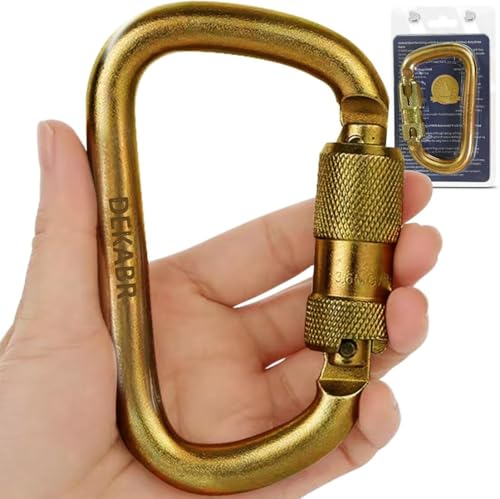
- ✓ Extremely durable steel build
- ✓ Auto-locks with one hand
- ✓ Snag-free keylock nose
- ✕ Heavier than aluminum options
- ✕ Slightly pricier
| Material | High-strength alloy steel |
| Breaking Strength | 45kN (10,000 pounds) |
| Lateral Load Capacity | 16kN (3,596 pounds) |
| Dimensions | Height: 4.49 inches, Width: 2.78 inches, Gate Opening: 0.94 inches |
| Weight | 9.8 ounces |
| Locking Mechanism | Double-lock automatic rotating barrel |
Right out of the gate, this steel carabiner feels like a fortress in your hand. Unlike lighter, aluminum models, its hefty build and matte gold finish give it an unmistakable sense of durability.
The instant automatic locking mechanism is smooth yet firm, snapping shut with a reassuring click that you can hear and feel.
The double-lock design is a game-changer—twisting the barrel to open feels effortless, even with one hand. Once you release, it auto-relocks seamlessly, which means no accidental openings during your climb or descent.
The keylock nose prevents snags on ropes or gear, saving you frustration when clipping or unclipping quickly.
Handling this carabiner, you immediately notice the solid cold-formed steel construction. It’s surprisingly lightweight at under 10 ounces but doesn’t feel flimsy.
The D-shape makes it easy to orient under load, and the high-strength alloy steel promises serious safety margins—up to 45KN vertical load capacity.
Whether you’re rock climbing, tree work, or rescue operations, this carabiner feels reliable and ready for tough environments. Its corrosion-resistant surface holds up well in wet or rugged conditions, and the smooth surface minimizes scratches on gear.
Carrying it around, you’ll appreciate how compact yet sturdy it is, fitting comfortably in your hand or clip-on gear.
Overall, this DEKABR carabiner combines heavy-duty performance with user-friendly features that make your tasks safer and more efficient. It’s a solid investment for anyone serious about their safety gear, offering peace of mind on every adventure.
What Characteristics Should You Look for in a Steel Carabiner?
Load capacity, indicated in kN, is essential for safety; a carabiner should exceed the maximum load expected during its use. Always consider the dynamic and static loads involved in your activities, as this will guide you in selecting a carabiner with the appropriate strength.
The locking mechanism enhances safety by preventing unintentional openings, which is vital in climbing and rescue operations. Different mechanisms offer varying levels of convenience and security, so choose one that aligns with your specific needs and skill level.
The shape and design of a carabiner can significantly influence its performance. D-shaped carabiners are popular for their strength and efficient load distribution, while oval shapes are often favored for aid climbing and rigging due to their versatility.
Weight is another factor to consider, especially for climbers and hikers who prioritize minimizing pack weight. While lighter carabiners are advantageous for mobility, heavier options may provide additional durability and robustness for industrial applications.
Size plays a role in usability; a carabiner should fit comfortably in your hand and be easy to clip onto your gear. It’s important to balance size with strength, as larger openings can lead to easier clipping but may also increase the risk of cross-loading.
Lastly, certification from recognized organizations ensures that the carabiner has undergone rigorous testing for safety and performance. This certification gives peace of mind that the equipment will perform reliably under expected loads and conditions.
How Important Is the Weight Rating for Steel Carabiners?
The weight rating of steel carabiners is crucial for ensuring safety and performance in various applications.
- Load Capacity: The weight rating indicates the maximum load a carabiner can safely support without failing. This is essential for climbers, rescue workers, and industrial users who rely on the carabiner to hold significant weight during use.
- Material Strength: Steel carabiners are made from high-strength steel, which provides a higher weight rating compared to aluminum carabiners. Understanding the weight rating helps users select the appropriate carabiner based on the specific demands of their activities, ensuring both durability and reliability.
- Safety Standards: Carabiners are tested and rated according to industry standards, such as the UIAA or ANSI. Knowing the weight rating ensures that users are compliant with safety regulations and can trust their gear during critical operations.
- Dynamic vs. Static Loads: The weight rating often differentiates between dynamic and static loads, which is important for activities like climbing where sudden forces can exceed static weight limits. Users must consider these factors to prevent accidents and ensure the gear is suited to their specific needs.
- Application Suitability: Different activities require different ratings; for instance, a carabiner used in climbing might need a higher rating than one used for simple gear organization. Understanding the weight rating helps users choose the best steel carabiner for their intended application, enhancing safety and performance.
What Types of Steel Carabiners Are Commonly Used?
The common types of steel carabiners include:
- Locking Carabiners: These are designed with a mechanism that secures the gate in place to prevent accidental opening.
- Non-Locking Carabiners: These carabiners feature a simple gate that can be easily opened and closed but do not provide the same level of security as locking types.
- Auto-Locking Carabiners: These combine the convenience of non-locking carabiners with added safety by automatically locking when closed.
- Wire Gate Carabiners: These are lightweight options that use a wire gate instead of a solid gate, making them ideal for reducing weight without sacrificing strength.
- Screw Lock Carabiners: These feature a threaded sleeve that screws down over the gate to secure it, providing a reliable locking mechanism.
Locking carabiners are essential for situations where safety is paramount, such as climbing or rescue operations. The locking mechanism ensures that the carabiner remains securely closed, reducing the risk of accidental disengagement.
Non-locking carabiners are more versatile for quick attachments and detachments, making them suitable for gear organization, keychains, or any application where safety from accidental opening is not a major concern. They are faster to operate but should be used with caution in high-stakes environments.
Auto-locking carabiners offer the best of both worlds, providing the ease of use of non-locking carabiners while ensuring that the gate is securely locked after closing. This is particularly beneficial in climbing or industrial applications where a secure connection is crucial.
Wire gate carabiners are popular among climbers and outdoor enthusiasts due to their lightweight design and resistance to freezing in cold weather, unlike solid gates that can jam. They offer a lower profile and can be used effectively for quickdraws and other gear setups.
Screw lock carabiners are favored for their added security in dynamic situations. The threaded sleeve requires intentional action to unlock, making them a reliable choice for climbing, rigging, or any activity where secure attachment is critical.
What Are the Advantages of Using Steel Carabiners Over Other Materials?
The advantages of using steel carabiners over other materials are significant, particularly in terms of strength and durability.
- High Strength: Steel carabiners are known for their superior tensile strength compared to aluminum or plastic alternatives. This makes them ideal for heavy-duty applications such as climbing, rigging, and industrial use, where safety is paramount.
- Durability: Steel is inherently more resistant to wear and damage from environmental factors than other materials. This ensures that steel carabiners maintain their integrity over time, even when exposed to harsh conditions, making them a reliable choice for outdoor and industrial environments.
- Corrosion Resistance: Many steel carabiners come with coatings or treatments that enhance their resistance to rust and corrosion. This is particularly advantageous when used in marine environments or areas with high humidity, ensuring longevity and safety.
- Shock Load Resistance: Steel carabiners can handle shock loads better than aluminum carabiners, which may deform under stress. This characteristic is crucial in situations where sudden forces may be applied, such as during climbing falls or heavy load drops.
- Versatility: Steel carabiners are available in various designs and locking mechanisms, making them suitable for a wide range of activities from climbing to construction. Their robustness allows them to perform well in different applications, providing users with flexibility in their gear choices.
Which Brands Are Considered the Best for Quality Steel Carabiners?
Some of the best brands for quality steel carabiners include:
- Black Diamond: Known for their high-performance climbing gear, Black Diamond’s steel carabiners are designed for durability and strength, making them a favorite among climbers and outdoor enthusiasts.
- Petzl: Petzl offers a range of steel carabiners that are particularly valued for their innovative designs and safety features, catering to both professional climbers and recreational users.
- Camp: Camp’s steel carabiners are recognized for their lightweight yet strong construction, making them ideal for a variety of activities including climbing, rescue, and industrial applications.
- Omega Pacific: Omega Pacific carabiners are noted for their robust steel designs that provide exceptional strength and reliability, particularly suited for heavy-duty use in climbing and rigging scenarios.
- Trango: Trango offers steel carabiners that combine functionality with a sleek design, focusing on usability in climbing and outdoor sports while ensuring top-notch safety standards.
Black Diamond is a highly respected brand in the climbing community, known for their rigorous testing and commitment to safety. Their steel carabiners are made with high-grade materials that withstand extreme conditions, making them suitable for both sport and trad climbers.
Petzl has a strong reputation for innovation, with features like the screw-lock mechanism and various shapes that enhance usability. Their steel carabiners are crafted to meet the needs of demanding climbers and are often used in professional settings as well.
Camp is recognized for producing some of the lightest steel carabiners on the market, which do not compromise on strength. This balance makes them a popular choice for climbers who want to minimize weight without sacrificing safety.
Omega Pacific specializes in creating heavy-duty gear, and their steel carabiners are no exception. They are engineered for maximum strength, making them a go-to choice for those involved in rescue operations or other high-stakes activities.
Trango’s carabiners are designed with the modern climber in mind, emphasizing both aesthetics and functionality. Their products often include features that facilitate easy handling while ensuring that safety is never compromised.
How Do You Properly Use and Maintain a Steel Carabiner?
To properly use and maintain a steel carabiner, it is essential to understand its features, usage guidelines, and maintenance practices.
- Choosing the Right Steel Carabiner: Selecting the best steel carabiner depends on its intended use, weight capacity, and locking mechanism.
- Proper Usage Techniques: Understanding how to correctly attach and detach the carabiner is crucial for safety in climbing or rigging activities.
- Regular Inspection: Routine checks for wear, corrosion, or damage are vital to ensure the carabiner’s reliability and performance.
- Cleaning and Maintenance: Keeping the carabiner clean and lubricated will enhance its longevity and functionality.
- Storage Practices: Proper storage techniques can prevent damage and ensure the carabiner is ready for use when needed.
Choosing the Right Steel Carabiner: It’s important to select a steel carabiner that meets the requirements of your specific activity, such as climbing, industrial work, or rescue operations. Look for one with an appropriate weight rating, typically measured in kilonewtons (kN), and consider features like a locking mechanism for added security.
Proper Usage Techniques: When using a steel carabiner, ensure it is fully closed and locked when in use to prevent accidental disengagement. Always load the carabiner along its major axis and avoid cross-loading, which can significantly reduce its strength.
Regular Inspection: Inspect your steel carabiner frequently for signs of wear, such as scratches, dents, or rust. Pay special attention to the locking mechanism and the gates to ensure they function smoothly and securely.
Cleaning and Maintenance: To clean a steel carabiner, use mild soap and water to remove dirt and grime, and dry it thoroughly to prevent rust formation. Occasionally, applying a light lubricant to the locking mechanism can help maintain its smooth operation.
Storage Practices: Store your steel carabiner in a cool, dry place away from direct sunlight and moisture to prevent corrosion. Avoid placing heavy items on top of it or in environments where it could get scratched or damaged.
What Safety Standards Should You Be Aware of When Using Steel Carabiners?
When using steel carabiners, it is essential to be aware of various safety standards to ensure reliability and performance.
- UIAA Certification: The International Climbing and Mountaineering Federation (UIAA) sets safety standards for climbing equipment, including carabiners. A UIAA-certified carabiner has undergone rigorous testing for strength and durability, ensuring it can withstand the demands of climbing and other high-stress activities.
- EN 362 Standard: This European standard specifies the safety requirements for connectors used in climbing and safety applications. Carabiners that meet EN 362 standards are tested for strength, gate opening, and durability, providing assurance that they can safely handle the loads expected in climbing scenarios.
- Breaking Strength Ratings: Carabiners come with a specified breaking strength rating, typically measured in kilonewtons (kN). It’s crucial to choose a carabiner with a breaking strength that exceeds the maximum load you anticipate, as this rating ensures the carabiner can handle dynamic forces without failure.
- Gate Mechanism Safety: The safety of the gate mechanism is vital for preventing accidental openings. Look for carabiners with locking mechanisms, such as screw-lock or twist-lock systems, which provide additional security and reduce the risk of unintentional release during use.
- Material Quality: Steel carabiners are typically made from high-strength steel alloys that offer superior durability compared to aluminum carabiners. Understanding the material properties and ensuring that the carabiner is free from defects or corrosion can significantly enhance safety during use.
Where Can You Get Reliable Reviews for the Best Steel Carabiners?
You can find reliable reviews for the best steel carabiners from various sources:
- Outdoor Gear Websites: Websites dedicated to outdoor gear often provide extensive reviews and comparisons of equipment, including steel carabiners.
- Customer Reviews on Retail Sites: Online retailers like Amazon or REI showcase customer reviews, giving insights into real-life experiences with different steel carabiners.
- YouTube Reviews: Many outdoor enthusiasts and professionals create video content reviewing gear, which can give you a visual sense of the product’s performance.
- Forums and Community Groups: Online forums and groups focused on climbing or outdoor activities often have discussions and recommendations from experienced users.
- Expert Reviews in Magazines: Outdoor and adventure magazines frequently publish gear reviews, featuring expert insights on the best steel carabiners available.
Outdoor gear websites like GearLab or OutdoorGearLab specialize in testing and reviewing outdoor equipment, including carabiners. These sites often have thorough testing protocols, comparing multiple products based on performance, durability, and user feedback.
Customer reviews on retail sites provide a wealth of information as they reflect the opinions of actual users. You can filter reviews by rating, which helps identify both strengths and weaknesses of specific steel carabiners based on user experiences.
YouTube reviews are particularly useful because they allow you to see the carabiners in action, showcasing their features and how they perform under different conditions. Many reviewers also provide detailed breakdowns of the specifications and recommend the best choices for specific activities.
Forums and community groups like those on Reddit or climbing-specific platforms often have threads dedicated to gear recommendations. By interacting with seasoned climbers and outdoor enthusiasts, you can gather nuanced insights and personal experiences that aren’t always reflected in formal reviews.
Expert reviews in outdoor magazines such as Climbing or Outside often include comprehensive testing and comparisons of steel carabiners. These reviews are typically written by knowledgeable authors who test the products in real-world conditions, providing an authoritative perspective on the best options available.
Related Post: